
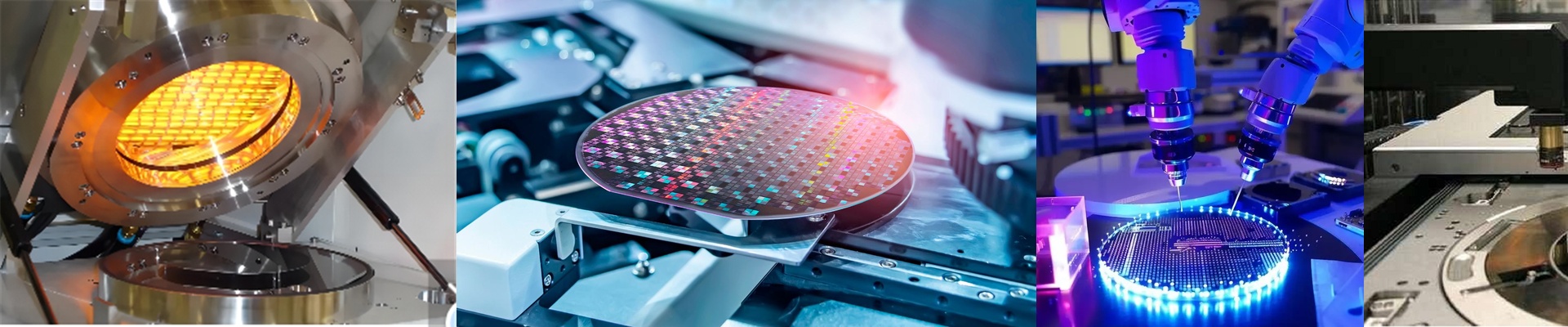
Out on the fab floor, cryogenic process windows need thermal support that just won’t drift. If the support heater slips, you’re risking photoresist profile collapse, CD excursions, and the kind of unplanned tool downtime nobody wants. We built our cryogenic system support heater for the thermal discipline of advanced wafer processing—stable, uniform heat, where the margin for error is measured in nanometers. What matters technically The unit uses a low-thermal-mass element to settle fast and hold tight control, keeping wafer-level uniformity within ±0.1°C across the bake surface. It runs clean—zero particle generation—and the construction fits cleanroom Class 1–100. Power delivery is repeatable, so it supports the thermal budget of soft bake and hard bake without overshoot. The heater is designed to drop into standard semiconductor tool footprints, with configurable voltage, connector types, and a compact profile for both retrofits and new installs. Why this matters in lithography and photoresist processing Temperature repeatability is what buys you overlay accuracy and yield. This heater keeps the cryogenic envelope stable during support heating, so wafer thermal history stays protected and bake-to-bake variability disappears. The payoff is fewer scrap lots, less rework, and cycle times that stay steady. Energy use is optimized with on-demand heating—no wasteful overshoot—and thermal stability with minimal operator intervention. Here are the practical details The heater is engineered to align with international semiconductor equipment standards and works as a validated, equivalent alternative for existing platforms. Installation comes down to matching the tool’s power, signal, and mechanical interfaces; we provide application notes to prevent thermal mismatch at the chamber boundary. Operating life depends on duty cycle and thermal cycling—plan preventive checks in high-throughput lines to keep uniformity at its best and avoid drift over long production runs.