
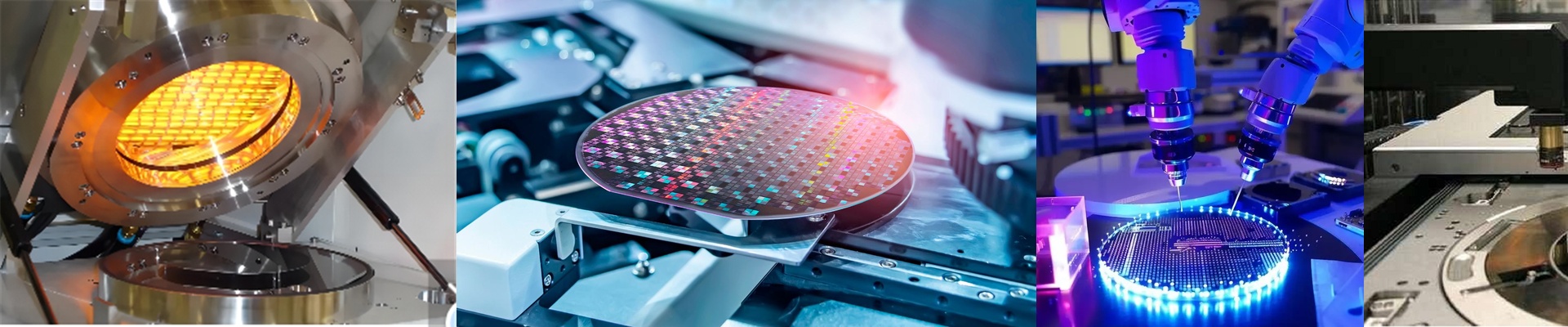
On the fab floor, you let the photoresist bake profile drift by 2°C and suddenly the lithography stack fights you. Soft bake temperature non-uniformity shows up fast as linewidth variation. Hard bake inconsistency? That lands as scumming and poor adhesion. End result: scrap wafers and unplanned downtime while you chase thermal stability. What matters technically We built these thermal spares for semiconductor-grade control: ±0.1°C wafer-level uniformity, Class 1–100 cleanroom compatibility, and zero particle generation. Short-wave and medium-wave infrared elements give you rapid, repeatable ramps with tight thermal budgets, so the photoresist sees the same profile cycle after cycle. The system runs 24/7 with zero unplanned stops, and the thermal profile stays locked even during line changeovers. Why it works in practice This isn’t a generic heater. It’s a process stabilizer. Tighter temperature control improves photoresist behavior across soft bake and hard bake, which cuts CD error, reduces defects, and protects yield. Reliability means fewer PM interruptions and fewer spares sitting on the shelf. Energy use is optimized by fast, targeted heating—no overshooting the setpoint. You end up with stable output, predictable maintenance windows, and repeatable process windows. What you need to know Integration is straightforward, but the thermal window is narrow. The hot zone has to match the chamber geometry and airflow to keep uniformity where it needs to be. Plan a short commissioning run to lock the recipe, and confirm connector compatibility and voltage with your equipment. Once it’s matched, the system delivers—but only if you treat the interface as part of the process, not an afterthought.