

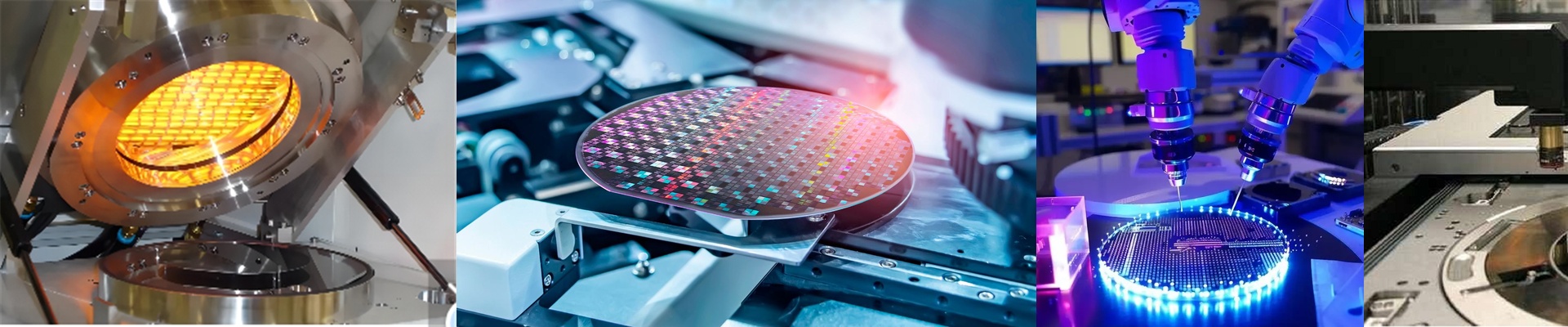
The wafer comes out of the final rinse and the clock starts ticking. If the dry cycle hesitates, you’re gambling with watermarks, pattern collapse, and photoresist defects that won’t show up until hours later—after exposure and bake—by which time yield is already gone. In a high-volume fab, drying isn’t a passive step. It’s a controlled thermal event, and the heater inside the drying module is what decides whether the process is repeatable or just hopeful. We built the industrial wafer drying system heater for the reality of Class 1–100 cleanrooms: tight thermal uniformity, zero particle generation, and 24/7 availability with no room for drift. Whether the application is spin drying, Marangoni, or IPA vapor-assisted drying, the heater has to deliver stable temperature within the thermal budget of the wafer and the chemistry of the photoresist stack.
What matters under the hood
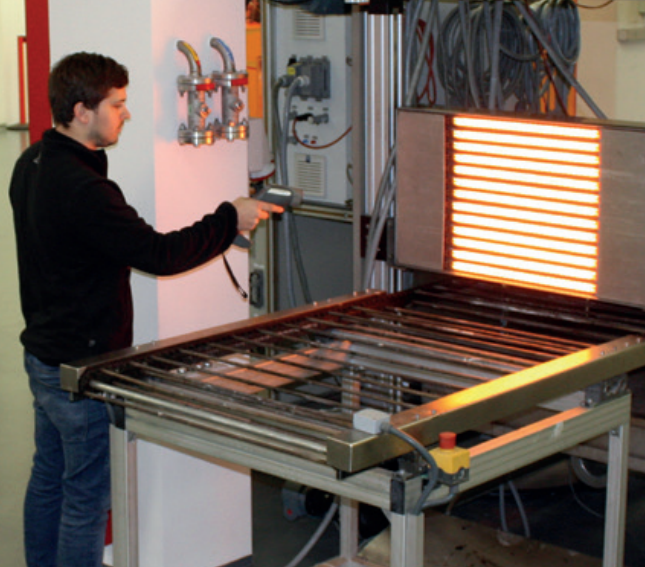
It’s not about “heat” in the abstract—it’s about controllable heat with measurable uniformity and stability. On the floor, that comes down to three specs that actually do the work: temperature uniformity across the wafer, repeatability from batch to batch, and cleanliness under continuous operation. Our heater targets ±0.1°C uniformity across the active heating zone. That’s not a marketing number; it’s the tolerance required to keep photoresist behavior consistent edge-to-edge. In lithography, a 0.5°C swing can shift critical dimension (CD) and sidewall angle. ±0.1°C keeps the process window where it should be—inside spec, not chasing excursions. Repeatability means consistent performance over time: stable setpoint attainment and low drift during long runs. We design for tight thermal hysteresis—once the drying chamber hits setpoint under load, the heater holds it without overshoot that stresses the wafer or undershoot that leaves moisture behind. Cleanliness comes down to particle performance. The heater architecture minimizes exposed hot surfaces and uses materials and geometries that don’t shed particulates under thermal cycling. In the cleanroom, particle count isn’t an afterthought; it’s a primary design output. The result is a heater that integrates without raising baseline defects. Heating technology is chosen for fast response and stable output. Depending on the system configuration, we use halogen, quartz, or NIR-optimized elements engineered for rapid ramp and steady-state stability. Fast response cuts the time the wafer spends in transition, and stable steady-state reduces variability in the dry profile. The heater is built to integrate cleanly: standard voltage options, compact form factors, and mounting configurations aligned to common drying module footprints. Electrical termination and mechanical interfaces are specified to cut installation time and support maintenance access without tearing down the whole chamber.
Why this matters where the process lives
Wafer drying sits between cleaning and lithography, and it influences both sides. If the heater underperforms, you’ll feel it in more than one place. In photoresist processing, soft bake and hard bake are thermally sensitive. A drying heater that introduces temperature ripple can create non-uniform solvent removal, which then shows up as thickness variation and CD non-uniformity after exposure and development. With ±0.1°C uniformity, the drying step stops being a hidden source of variability. Photoresist thickness and profile stay consistent, and the bake steps that follow behave predictably. On the cleaning side, incomplete drying leaves micro-menisci that dry unevenly, producing spots and stains that can become particle-initiated defects after patterning. The heater’s stable output enables consistent dry-down profiles, reducing watermark risk and lowering scrap from post-clean defects. Uptime is a process spec, not a service talking point. Unplanned stops in the dry module cascade into missed lots and squeezed schedules. We design the heater for 24/7 operation with predictable maintenance intervals, not surprise failures. Field data show units running continuously for tens of thousands of hours with stable output and low maintenance frequency—fewer line stoppages and more consistent cycle times. Energy use doesn’t drop because of a single component trick; it drops through efficient thermal transfer and minimal wasted heat. The heater concentrates energy where it’s needed, reduces parasitic losses, and supports faster ramp-to-setpoint. In practice, that means shorter dry cycles without thermal compromise—lower energy per wafer and higher throughput without changing the recipe.
The practical details that make or break it
A high-precision heater is only as good as the system it’s installed in, and there are real constraints to plan around. Match the heater to the chamber. Airflow patterns, baffle design, and exhaust strategy in the drying module affect thermal uniformity. A heater that performs perfectly in isolation can underperform if the chamber creates hot spots or recirculation zones. Expect to tune the chamber around the heater to hit the specified uniformity. Plan for thermal mass. The heater reaches setpoint quickly, but the entire module—fixtures, seals, and carrier—also has to stabilize. Process windows tighten under load, so verify that measured uniformity reflects conditions with wafers present, not an empty chamber. Maintenance access matters. Even with long life, periodic inspection is smart. Set up the installation so the heater can be accessed without disassembling unrelated subsystems. Cleanroom protocols demand controlled intervention; make sure the interface supports that workflow. Power infrastructure has to align. The heater’s electrical spec isn’t flexible. Provide the correct voltage and ensure a clean, stable supply. Voltage sag and electrical noise can introduce small temperature deviations that show up as repeatability issues. Finally, validate with your chemistry. IPA grades, rinse formulations, and resist stacks behave differently thermally. The heater gives you control; you still need to confirm the dry profile is compatible with your material set. The best results happen when the heater provides a stable platform, and the process team defines the exact profile that fits the product. If your line is running at wafer-level precision, the drying heater can’t be an afterthought. It has to be a specified, measured, and controlled part of the process—one that holds temperature within tolerance, keeps the chamber clean, and keeps the scheduler honest. That’s the expectation in semiconductor manufacturing. That’s what the industrial wafer drying system heater is built to deliver.