
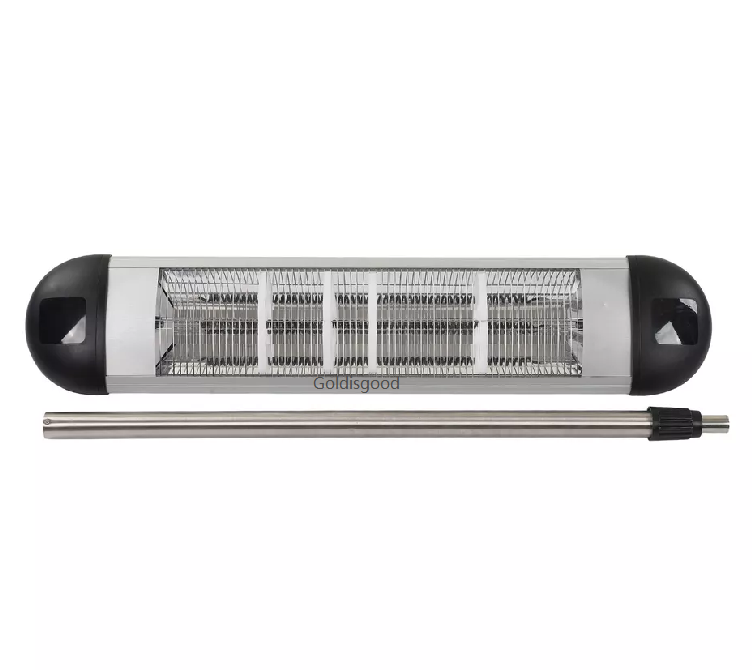
Why we stopped making “disposable” heaters
Let’s be honest: most bathroom infrared heaters are basically trash once they break. Usually, it goes like this: a heating element burns out after a few years, and suddenly you’re staring at a chassis that’s a nightmare to open. By the time you pay a technician to tear the whole thing apart, you’ve spent more on labor than the heater is actually worth. So, you just throw the whole unit in the bin and buy a new one. It’s a waste. And it’s annoying. So we decided to change how these things are actually built. We moved to a modular setup. The five-minute fix Instead of soldering wires or wrestling with stubborn brackets, we made the infrared modules “drop-in.” Think of it like a cartridge. If a tube goes out, you don’t need a full teardown. You just pull the old module out and slide a new one in. It turns an hour of frustrating work into a five-minute swap. It’s fast. Really fast. And it saves everyone a massive headache. Dealing with physics Here’s the thing: infrared lamps get incredibly hot. That’s how they work. But that heat eventually takes its toll—the quartz wears down and the filament thins out. It’s just physics. No matter how fancy the build is, the lamp will eventually die. By putting that element in its own removable module, we make sure a single burnt-out part doesn’t kill the entire machine or fry your control board. You replace the part that broke, not the whole system. The trade-off Now, this isn’t magic; there’s a compromise. Because we added connectors and rails to make the swap easy, the heater is a bit bigger. It takes up a few more millimeters of space than a compact, hard-wired unit would. But in my book, that’s a fair trade. I’d rather have a slightly larger box than have to send the whole unit back to the factory every time a bulb pops. A quick tip for the install If you’re wiring these in, just make sure your connectors are rated for the wattage. Loose connections are the enemy here—they create hotspots. Just keep the contact points clean and tight so you don’t get any carbon buildup. The best part? Your onsite team can get the heat back on without needing a master electrical certification to rebuild the entire system from scratch.