
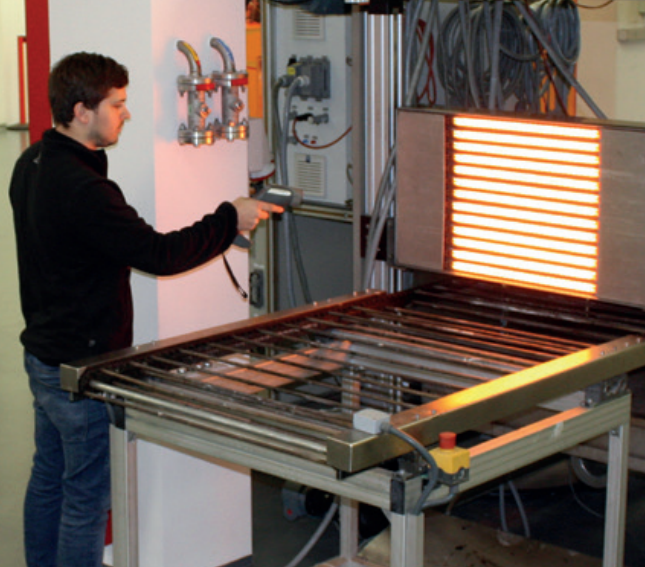
Keeping Things Safe When Using IR Heaters Around Volatile Chemicals
If you’re working on carbon nanotube (CNT) fabrication, you know the drill. You need pinpoint thermal control during the cleaning stages. But here’s the problem: when you’re dealing with solvents that love to catch fire or explode, a standard IR lamp is basically a ticking time bomb. One tiny spark or a filament that gives out, and you’ve got a disaster on your hands. We don’t do open-air lamps here. Instead, we wrap everything in a tight, hermetic seal. The logic behind the barrier Think of it like a protective shell. We tuck the heating elements inside a high-grade quartz or ceramic sleeve, then wrap that in a jacket that can handle nasty chemicals. This creates a physical gap. It keeps those volatile vapors far away from the electrical terminals where they don’t belong. We even use explosion-proof seals where the wires enter the unit. This stops “wicking”—that annoying thing where gases sneak along the cable insulation to get into the core of the heater. Dealing with the heat Now, wrapping a lamp in layers makes things a bit tricky. You’ve added thermal mass, so the lamp won’t hit its peak temperature instantly. It takes a minute to warm up. But there’s a silver lining. Once it’s hot, it stays hot. We tweak the wattage to make up for the heat lost through the outer jacket. The result? A steady, smooth heat flux. No flickering, no random spikes. Just the kind of consistency you need for CNT growth to actually work. The honest trade-offs I’ll be straight with you: this isn’t a magic fix. Because of all that protective packaging, you lose some of that raw radiant intensity. You won’t get the same heat density as a bare lamp. If your process needs a sudden, violent thermal shock, you’ll need to go with a higher wattage lamp to punch through those layers. Also, it’s bulkier. The sleeves take up more room. Double-check your machine’s chassis and make sure you’ve got the clearance before you start wiring everything up. It’s a lot easier to move a bracket now than to realize your heater doesn’t fit after you’ve spent three hours installing it.