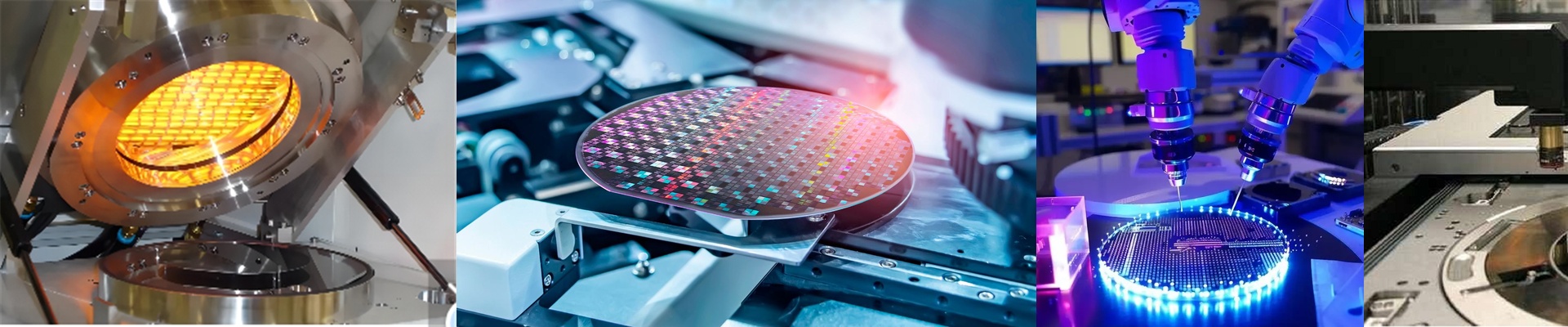
On the fab floor, soft bake isn’t a “warm-up.” It’s a boundary condition for linewidth control. Push the temperature 0.5°C off and you move the dose window. A hotspot on the plate can print a defect that makes it through etch. Canon lithography heater bulbs were built to hold that thermal boundary steady, shift after shift. What matters under the hood We run short-wave halogen elements in a quartz envelope. Fast response, low thermal inertia, and stable output. Across the bake plate, wafer-level uniformity lands within ±0.1°C, so every field hits the photoresist thermal budget. These bulbs are specified for standard Canon lithography platforms and drop into existing lamp housings without requalifying the whole thermal stack. They run clean, too—zero particle generation under Class 1–100 conditions, so particle counts stay flat through long bakes. In the field, you get 24/7 reliability, with stable output over 5,000+ hours and predictable end-of-life behavior that lets you plan maintenance instead of chasing it. Why this matters in lithography Lithography is all about repeatability. When the bulb holds bake temperature precisely, soft bake and hard bake profiles track the same lot to lot. The payoff: fewer reworks, tighter CD control, and less scrap tied up in resist rework. Energy use drops because the system hits setpoint quickly and holds it without overshoot. And fewer lamp swaps translate directly into less unplanned downtime. What to watch on install and sustain Install is straightforward, but treat the bulb with ESD-safe handling and align it exactly to the reflector geometry. Misalignment shows up fast as asymmetric uniformity. Use only the specified voltage and connector type, and make sure the lamp housing cooling path is clear—thermal management at the bulb base is what keeps long-term stability honest. Plan replacements around preventive maintenance windows. That’s how you protect uptime without surprises.